
FAQs
What are carbon ceramic brakes?
1
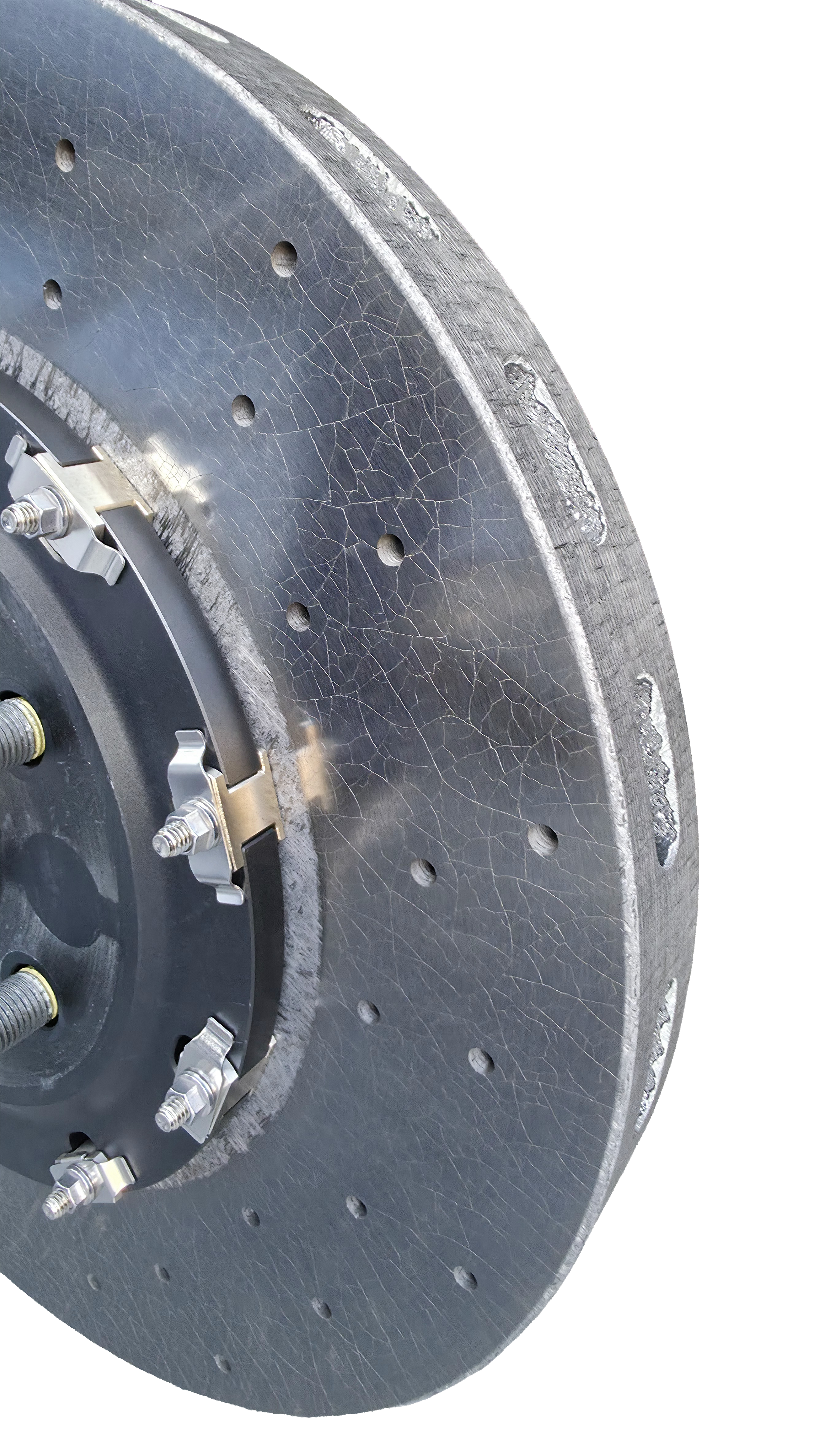
Carbon ceramic brakes are high-performance braking systems made from a composite of silicon carbide and carbon fibers, primarily used in supercars, luxury vehicles, and motorsport for their exceptional heat resistance, reduced weight, and superior durability compared to steel brakes. They offer reduced, consistent braking distances and significantly longer lifespans.
How Carbon Ceramic Brakes Work?
2
Carbon ceramic brakes use rotors made from carbon fiber reinforced silicon carbide (C/SiC), a composite material that combines carbon fibers for structural strength with a silicon carbide ceramic matrix for hardness and heat resistance. This material is significantly lighter, harder, and more thermally stable than the cast iron used in conventional brake rotors. Carbon ceramic rotors are paired with specially formulated brake pads designed to work with the C/SiC surface.
What are the key advantage of carbon ceramic brakes?
3
The key advantage of carbon ceramics are:
- Shorter braking distance
- Ultra-lightweight structure (up to 60 % lighter than iron)
- Extreme heat tolerance (up to 1,000 °C)
- Fade-free performance even under sustained track use
- Resistance to corrosion and oxidation
Gen 3 Carbon Ceramic Brake (CCB-H) technology is manufactured with continuous long-fiber, 3D-bonded carbon architecture offering superior resistance to heat, cracking, and wear compared to chopped-fiber OEM ceramic systems. The same design is used in McLaren, Lamborghini, Porsche, Ferrari, Audi RS, and Corvette Z06 platforms.
Why Gen 3 Technology Is the Smarter Choice?
4
Do carbon ceramic brakes work in the rain?
5
Yes. Modern carbon ceramic brakes, particularly SiC-coated CCB rotors, perform effectively in wet conditions. Early uncoated carbon ceramic technology had measurably reduced initial bite when wet, but current SiC-coated surfaces recover braking performance within one to two pedal applications after water exposure. For everyday driving in rain, the performance difference compared to dry conditions is minimal.
Are carbon ceramic brakes safe for daily driving?
6
Absolutely. Carbon ceramic brakes are not exclusively a track or racing product. They are factory-fitted to numerous luxury and performance vehicles designed for daily road use, including SUVs, sedans, and grand touring cars. When paired with the correct street-compound brake pads and properly bedded, carbon ceramic brakes deliver excellent cold bite, low noise, minimal dust, and progressive pedal feel suitable for everyday driving.
Are carbon ceramic brakes worth the investment?
7
For many owners, yes. The value proposition extends beyond braking performance to include dramatically extended rotor life (potentially eliminating multiple iron rotor replacements over the vehicle's life), reduced unsprung weight that improves handling, virtually eliminated brake dust, and the elimination of rotor rust.
Do carbon ceramic brakes need special brake fluid?
8
Carbon ceramic brakes use the same glycol-based brake fluid types as iron brake systems. DOT 4 is suitable for street driving, DOT 5.1 provides additional thermal margin for enthusiasts, and racing-specification fluids are appropriate for track use. The fluid does not contact the carbon ceramic rotor surface, so compatibility is not a direct issue, but fluid quality determines whether the hydraulic system can deliver consistent braking force under demanding conditions.
Can I use regular brake pads on carbon ceramic rotors?
9
No. This is the single most important rule of carbon ceramic brake ownership. Standard metallic and semi-metallic brake pads must never be used on carbon ceramic rotors. These pads contain hard metal particles that gouge the rotor surface, fail to form a proper transfer layer, and create dangerous braking inconsistency. Always use pads specifically formulated for carbon ceramic surfaces.
Can I switch between different pad brands on the same rotors?
10
Yes. You can switch between any of the recommended carbon ceramic compatible pad brands without damaging the rotors. When switching brands, clean the rotor surface with brake cleaner to remove the previous pad's transfer layer, then perform a complete bedding procedure with the new pads. This allows the new compound to establish its own clean transfer layer.
How do I know when carbon ceramic brake pads need replacing?
11
Measure pad friction material thickness. Replace pads when the material reaches 3 to 4 mm above the backing plate. Performance indicators include increased stopping distances, softer pedal feel, and increased noise. Some pads include audible wear indicators. Never allow pads to wear to the backing plate, as metal-to-ceramic contact damages the rotor.
Can brake dust from carbon ceramic pads damage my wheels?
12
Carbon ceramic brake dust is generally less corrosive and less abrasive than conventional metallic brake dust. It is lighter in colour and easier to clean from wheel surfaces. While regular wheel cleaning is still recommended, carbon ceramic dust is significantly less damaging to wheel finishes than the iron-laden dust produced by metallic pads on iron rotors.
Are carbon ceramic brakes better for track use?
13
For sustained track use, carbon ceramic brakes offer significant advantages over iron systems. They resist fade over extended sessions, maintain dimensional stability (eliminating the warping common with iron rotors after hard track use), and provide consistent pedal feel lap after lap. The weight reduction also benefits vehicle dynamics. However, the pad compound selection must match the intended track intensity.
Can I put carbon ceramic brakes on a car that did not come with them from the factory?
14
Yes. This is called a conversion installation, and it is one of the most popular reasons customers come to AME Motorsport. Conversion kits include rotors, necessary mounting hardware or adaptor brackets, and carbon ceramic compatible brake pads. The conversion brings all the benefits of carbon ceramic technology to vehicles that left the factory with iron brakes.
Can I use a pressure washer on carbon ceramic brakes?
15
Yes, a standard pressure washer at normal cleaning pressures can be used to clean carbon ceramic brake components. Avoid focusing the pressure washer stream directly on the braking surface at close range for extended periods, and avoid using extremely high-pressure industrial equipment. Normal vehicle washing procedures, including wheel well cleaning, are perfectly safe.
What causes brake pedal pulsation on carbon ceramic brakes?
16
Pedal pulsation on carbon ceramic systems is almost never caused by rotor warping (which is the common cause on iron systems). Instead, pulsation on carbon ceramic brakes is typically caused by uneven pad material deposits on the rotor surface. These deposits create areas of different friction characteristics as the rotor rotates. The most common cause is holding the brake pedal while stationary after hard braking, which imprints pad material onto one section of the rotor. Proper re-bedding usually resolves this condition.